
Art and culture
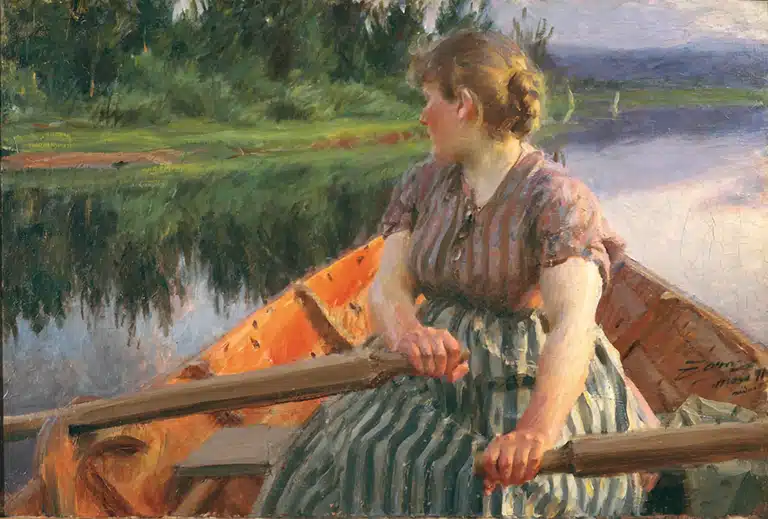
Anders Zorn
Midnight, 1891
© Zornmuseet, Mora
FEB.19.2026 – MAY.17.2026, MAD
Anders Zorn
Traveling the World, Remembering the Land
Coming from a humble rural background, Swedish artist Anders Zorn (1860-1920) achieved international fame as a portraitist of kings, politicians, and other celebrities of his time.
This exhibition presents a comprehensive overview of his work, a long and rich career in which his interest in portraying both the features of modernity and scenes characteristic of traditional life in his native region complemented his work as a portraitist.
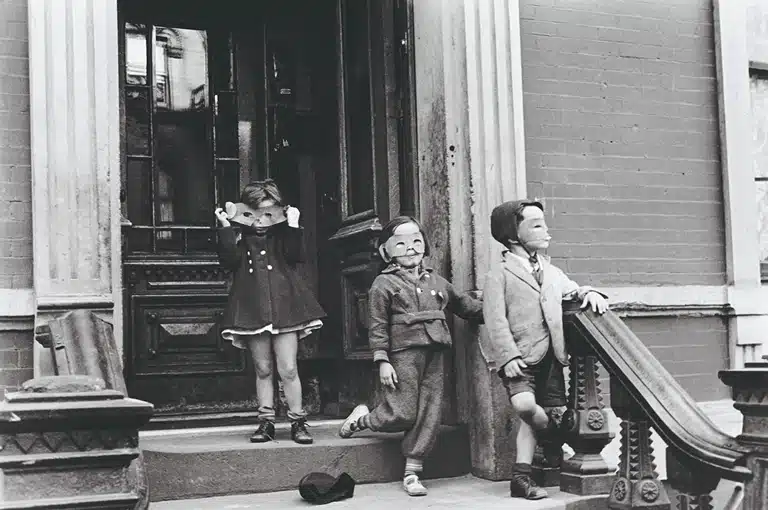
Helen Levitt
New York, c. 1940
© Film Documents LLC, courtesy Zander Galerie, Cologne
FEB.19.2026 – MAY.17.2026, MAD
Helen Levitt
Helen Levitt (1913–2009) began photographing her native New York in the late 1930s, capturing images that reflected life in the poorest neighborhoods and, in particular, children and their street games. She did so with a special instinct for conveying the emotion, mystery, and humor contained in those childhood scenes.
Her work soon received the recognition it deserved, and in 1943 the Museum of Modern Art in New York organized her first solo exhibition. Deeply committed to social causes, Levitt was one of the first women to carve out a professional path in photography. The nearly 200 photographs featured in this exhibition offer a comprehensive journey through her entire career.
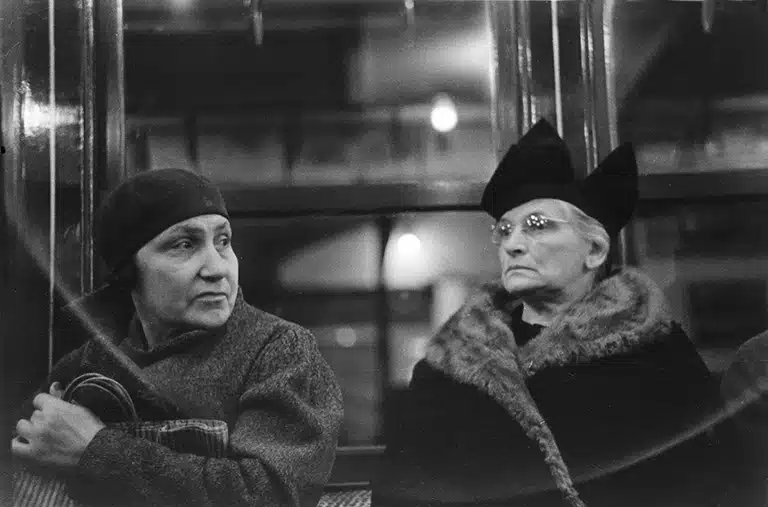
Walker Evans
Subway Passengers, New York, 1938
Vintage gelatin silver print
Private Collection, San Francisco
© Walker Evans Archive, The Metropolitan Museum of Art
FEB.26.2026 – MAY.24.2026, BCN
Walker Evans
Now and Then
In 2009, Fundación Mapfre inaugurated its photography exhibition program with a major retrospective dedicated to Walker Evans (1903–1975). Sixteen years later, Walker Evans. Now and Then presents a new reading of the work of one of the most influential photographers of the twentieth century, a key figure in shaping the modern documentary gaze. The exhibition brings together a broad selection of images that highlight the enduring relevance of his sensibility: portraits of anonymous individuals, street scenes, sober architectural studies, and photographs of urban signs that reveal the visual culture of his time. The exhibition path proposes an updated perspective on the way Evans observed and understood his surroundings, articulating a direct, reflective, and lyrical vision that continues to inspire generations of artists and to shape the way we understand documentary photography.
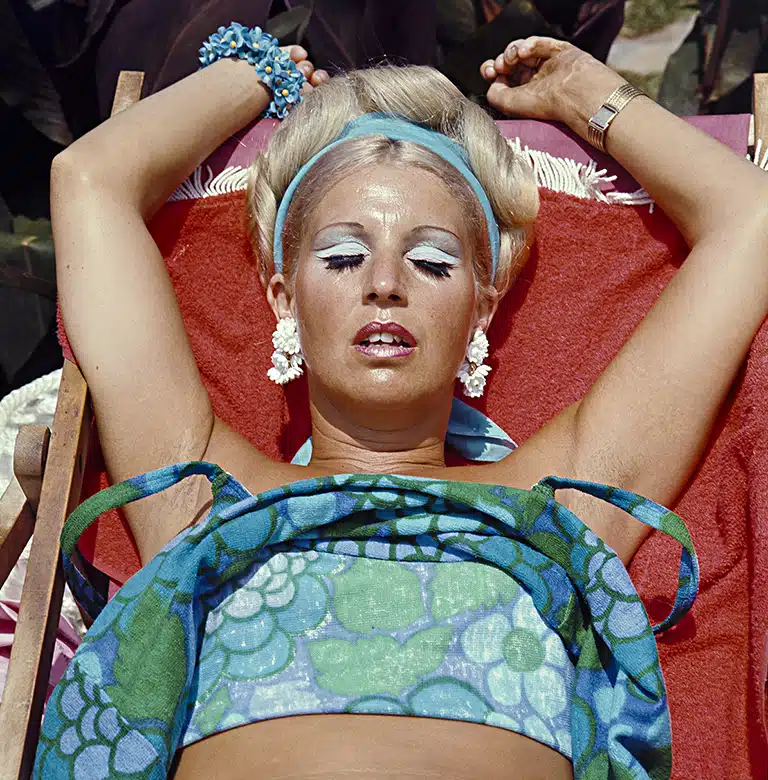
Carlos Pérez Siquier
Marbella, 1974
Fundación Mapfre Collections
© Pérez Siquier, VEGAP, Barcelona, 2026
FEB.26.2026 – MAY.24.2026, BCN
Pérez Siquier
Fundación Mapfre Collections
Centered on a key figure in the modernization of Spanish photography, this exhibition offers—through a significant selection of works from the Fundación Mapfre Collections—a journey through the series that defined the career of Carlos Pérez Siquier (1930–2021): from the documentary force of La Chanca, through the revitalizing drive of Almerian Photographic Association (AFAL), to his bold leap into color with Informalisms, The Beach, and Traps for the Unwary. It also includes his later projects, Encounters and La Briseña, where his gaze takes on a more introspective tone. Together, these works allow us to rediscover one of the most influential photographers in the visual transformation of 20th‑century Spain—a creator who observed his surroundings with a free, critical, and deeply poetic sensitivity.

Felipe Romero Beltrán
Frame. Rafa's Room, 2021-2024
© Felipe Romero Beltrán
Felipe Romero Beltrán. Bravo
– 29
Carré d’Art Nimes (Nimes, France)
Border. Conflict. Visual reflection.
Felipe Romero Beltrán’s photographic practice (Bogotá, 1992) sits at the edges of documentary photography, using elements typical of the genre—such as direct recordings of everyday life and the creation of documents about a defined historical reality—and placing them in dialogue with artistic, painterly, or performative elements. The result is a body of images that go beyond the purely photographic to encompass the full scope of visuality.
Throughout his career, Romero Beltrán has consistently been drawn to territories that are, or have been, sites of tension, conflict, and visual reflection. A prime example is his project Bravo, which won the 2023 edition of the KBr Photo Award, the award that supports new projects through a cash prize, an exhibition of the project in our two galleries (Barcelona and Madrid), and the publication of the corresponding catalog.
Set in the space where those hoping to cross the river into the United States wait for the right moment, Bravo is, in the photographer’s own words, an essay documenting the bodies, objects, and architecture of a place that, during this period of waiting, precedes the border.

José Guerrero
GFK #001, 2004
Courtesy of Galería Alarcón Criado
© José Guerrero, VEGAP, Madrid, 2025
José Guerrero. On the subject of landscape
– 25
José Guerrero Center (Granada)
Intrigue. Seriality. Renewal.
José Guerrero (Granada, 1979) conceives landscape as an active and dynamic entity where the sociopolitical, cultural, and collective imaginary intertwine in intriguing ways.
For Guerrero, photographing a territory, landscape, or place involves engaging with the relationships of proximity, the alterations, and the tensions they embody, thereby rejecting the modern conception of landscape as something purely natural and detached from us.
His artistic output is characterized by a meticulous organization into series, which together form a fluid mosaic of meanings. In some of these series, Guerrero deliberately employs certain conventions of natural and architectural landscape inherited from modern photography, such as defined horizons, the theatricality of the sky and clouds, or color saturation. This approach invites the viewer to experience a renewed way of seeing, beyond mere contemplation.

Francisco de Goya
There Is No Time, ca. 1810-1814 /1906
Fundación MAPFRE Collections
© Francisco de Goya. The Disasters of War
Francisco de Goya y Lucientes. The Disasters of War. Fundación MAPFRE Collections
– 11
The Grand Master’s Palace (La Valletta, Malta)
Reformism. Reflection. Testimony.
Francisco de Goya y Lucientes was born in 1746, in Fuendetodos, Zaragoza. There he studied with José Luzán, through whom he came into contact with the art of engraving. His work is the result of constant experience and reflection, shaped by his enlightened reformism, which opposed the traditionalism deeply rooted in Spanish society. Unlike many of his contemporaries, Goya left us a profoundly lucid and conscious testimony of his time.
In the months following the French invasion and the beginning of the Peninsular War (1808–1814), a conflict that pitted the Spanish people against the French troops, the artist experienced the numerous upheavals accompanying the fall of the Ancien Régime.
In 1810, he began the etching series “The Disasters of War”, consisting of 80 titled and numbered plates, executed primarily in etching with a number of additions in drypoint and aquatint, and printed in black ink. They were first published by the Royal Academy of Fine Arts of San Fernando, and the fourth edition, which forms part of the Fundación MAPFRE Collections, was produced in 1906 at the Calcografía Nacional.
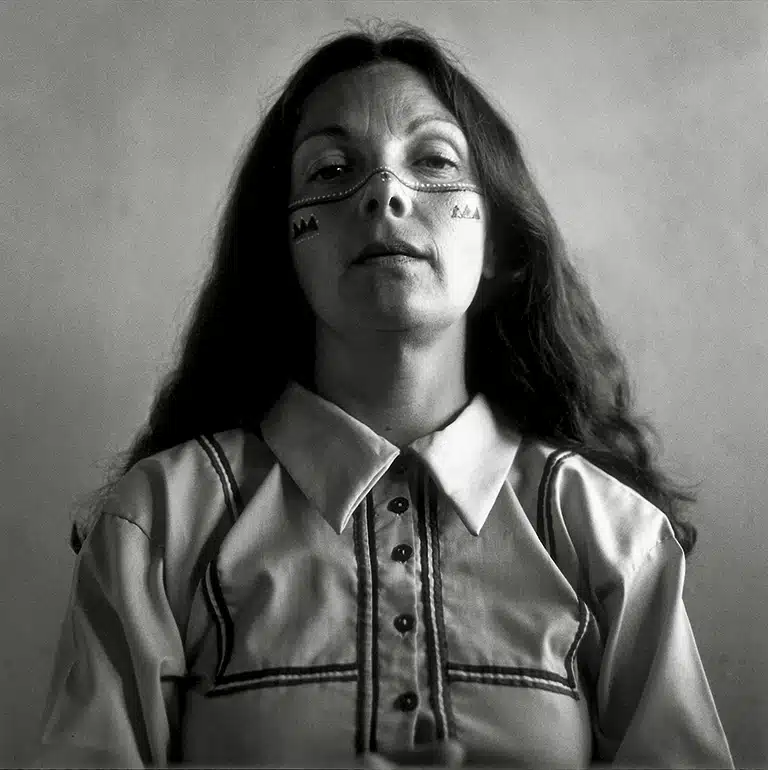
Graciela Iturbide
Self-Portrait with the Seri People, Sonoran Desert, Mexico, 1979
Fundación MAPFRE Collections
© Graciela Iturbide
Graciela Iturbide. Fundación MAPFRE Collections
– 12
International Center of Photography (ICP)
Ritual. Nature. Culture.
The work of Graciela Iturbide, one of the most prominent Mexican photographers on the international contemporary scene, is key to understanding the evolution of photography in Mexico and across Latin America.
Straddling the documentary and the poetic, her singular way of seeing integrates lived experience and dreams into a complex web of historical, social, and cultural references. The fragility of ancestral traditions and their precarious survival, the interaction between nature and culture, the importance of ritual in everyday gestures, and the symbolic dimension of landscapes and found objects occupy a central place in her prolific career. Her work is characterized by a continuous dialogue between images, time, and symbols, unfolding in a poetic display where dream, ritual, religion, travel, and community converge.
Celebrated for her portraits of the Seri people, her vision of the women of Juchitán, and her photographs of birds, Graciela Iturbide’s visual journey has extended, beyond her native Mexico, to countries as diverse as Spain, the United States, India, Italy, and Madagascar.