Fundación Sembrar promotes the comprehensive development of children in Ecuador
Education as an essential tool for preventing exclusion and violence
Current Project
For more than two decades, Fundación Sembrar has been working in the outskirts of Quito, in communities affected by poverty, social exclusion, and the growing impact of armed violence, drug trafficking, and the recruitment of children and young people by criminal organizations. In this context, its goal is to ensure that children have greater opportunities for development from an early age and can build a better future.
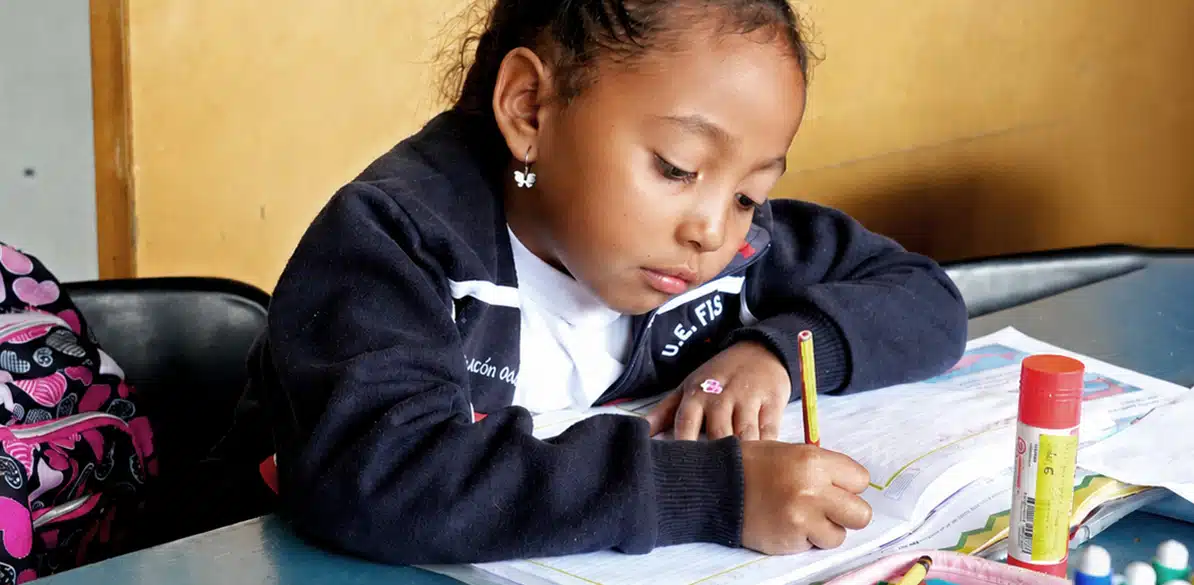
Its EduPaz project supports children ages 6 to 11 during a key stage of their development, fostering their physical, cognitive, and socioemotional growth. The project aims to help them complete elementary education and continue their schooling through at least the eighth grade. To achieve this, it creates safe spaces that encourage learning, curiosity, self-reliance, teamwork, peaceful conflict resolution, and the development of life skills such as self-awareness, critical thinking, decision-making, communication, and interpersonal relationships, helping to prevent school dropout and recruitment by criminal networks.
Recognizing the essential role of families, the project engages parents and caregivers to help them develop the parenting skills needed—such as active and empathetic listening and encouraging children’s curiosity, interests, and independence—to support the comprehensive development of their children. To do this, the organization offers training opportunities, home visits, group activities, and personalized support.
The need for academic support and comprehensive assistance reflects the educational crisis facing the country, particularly in schools located in the intervention areas, which are affected by structural limitations and complex family environments. Nevertheless, the commitment shown by children and their families has led to significant improvements in academic performance, the adoption of new learning strategies, greater family involvement, and the development of essential life skills.
In this context, education is a key tool for breaking the cycles of poverty, exclusion, and violence as it provides meaningful opportunities for development. The EduPaz project contributes to SDG 4 (Quality Education) and SDG 10 (Reduced Inequalities), transforming children’s environments right from their earliest years and creating meaningful opportunities through education, emotional well-being, community engagement, and cultural expression.