Passo dopo Passo… Insieme tackles school dropout among preteens in Italy
SSupport and a different approach to learning help children stay in education
Current Project
These days, when it comes to their studies, children need to find useful and effective strategies that go beyond conventional approaches, which can sometimes be difficult to put into practice. This may be one of the reasons behind the growing phenomenon of early school dropout, which has already become a national emergency in many countries, including Italy. This phenomenon highlights, on the one hand, a chronic and structural problem within the education system and, on the other, the inadequacy of the responses offered to date.
Fundación Passo dopo Passo… Insieme has developed an intervention model based on an educational approach focused on school well-being, which enables it to identify potential vulnerabilities that may otherwise go unnoticed and prevent critical situations.
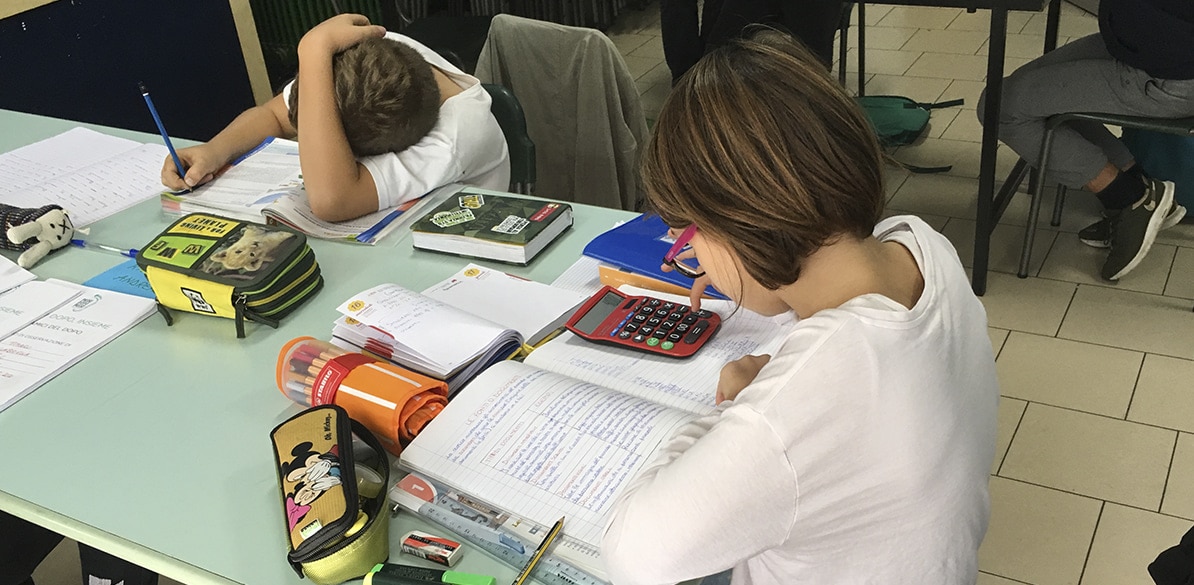
“Meglio dopo Insieme” is an after-school program for pre-teens (aged 11–14), created by the foundation more than 20 years ago. Its aim is to support the academic success of 230 students attending middle schools in the outskirts of Milan (Rogoredo and Sesto San Giovanni) and in the province of Monza and Brianza (Bellusco) through study support programs that foster motivation, self-awareness, skills, and effective learning strategies.
The tasks are not “the end” but “the means” of teaching young people how to organize their time and materials, develop independence and work with others. The program involves families and schools and promotes youth volunteering and active citizenship in the areas where the foundation operates.
The project supports children by challenging certain cultural paradigms that influence how they approach their studies, including the idea that poor academic performance is an immutable “way of life” and the idea that “school work comes before pleasure” is not always true, but rather that “school work can also be enjoyable.”
The foundation’s goal is to promote the positive dimension of learning and the school experience, enabling students to gain a new perspective on themselves and on school through positive outcomes.
To achieve this objective, it has four areas of action:
Action 1: after-school study support groups, including both individual and group sessions, as well as regular listening sessions for young people with an educator and a psychologist.
Action 2: promotion of volunteering and active citizenship.
Action 3: regular meetings with all the stakeholders involved: parents, school principals, teachers, therapists, social workers and members of the educational community.
Action 4: ongoing monitoring of the results achieved by the young people, both in educational terms (their ability to be organized, work independently and work with others) and in terms of academic performance.