From impetus to impact: the true path of social innovation
Find out how the winners of our Fundación Mapfre Awards for Social Innovation have evolved over time
Awards
Some projects start with an idea. Others arise from an urgent need: to change something that is not working. For the past nine editions, the Fundación Mapfre Awards for Social Innovation have focused precisely on these latter initiatives. Projects that seek not only to grow but to solve complex challenges: how to make cities accessible, how to improve the lives of people with chronic illnesses, and how to provide better care in an ageing society.
But the really interesting part is what happens after the award ceremony. It is what comes next. Today, as we look at how the winning projects have evolved, a diverse and deeply revealing story emerges: social innovation does not follow a straight path, but it does leave a mark. Here we showcase some of the projects that have been recognized by our awards.
Projects that transcend their origins and become systems
Some of the winners have achieved a particularly complex feat: they have evolved from being a specific solution into an integral part of a system.
This is the case of NaviLens, the winner of the 2nd edition, which has taken its accessible signage technology far beyond pilot projects. Today, it is present in dozens of cities and transit systems, and has expanded into new areas such as packaging and cultural spaces. Its progress shows how an idea conceived to
boost the independence of people with visual impairment can be integrated into real urban infrastructure.
Something similar has happened with PEGASI, winner of the 8th edition, which has grown from being a support tool for cancer patients into a comprehensive clinical platform. It now functions as an information system that supports cancer diagnosis and treatment, and is having an impact in hospitals across several countries.
Wheel the World, winner of the 4th edition, has also expanded its initial concept for accessible tourism and has become a global benchmark for accessibility verification, combining data, partnerships, and technology to transform the travel experience.
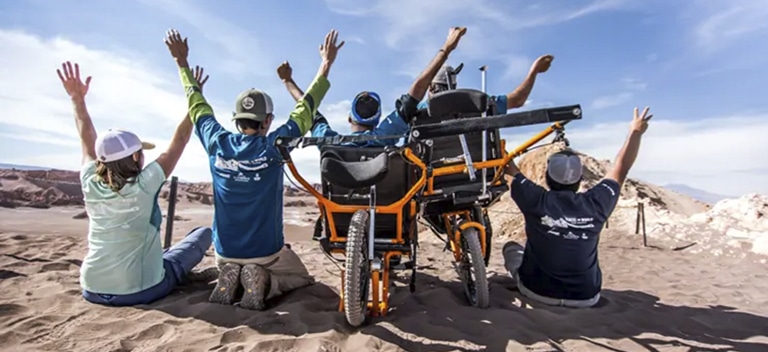
There is a common pattern among all these projects: innovation thrives when it connects with reality.
Initiatives that consolidate their position and find their balance
Not all projects evolve into large-scale infrastructures. Many take a different path: they consolidate through patience, persistence and adaptability.
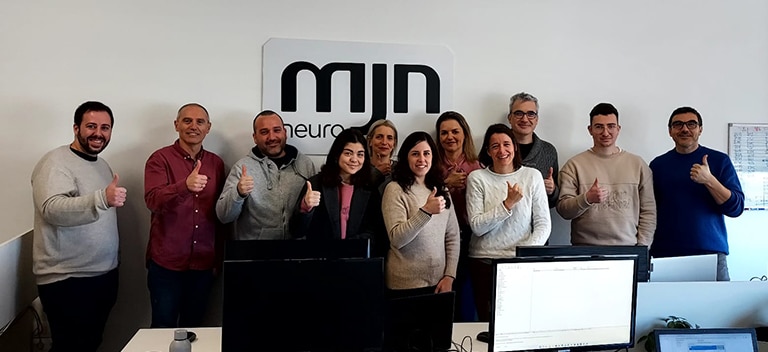
MJN Neuroserveis, winner of the 1st edition, is a good example. Originating in the field of digital health, it is now at a key juncture in its transition toward marketing its epilepsy devices in Europe. Its journey reflects the time required to turn medical innovations into real solutions for patients.
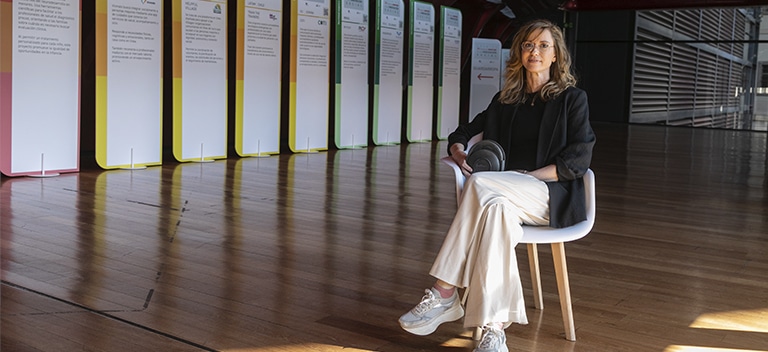
Similarly, Pensium, winner of the 3rd edition, has succeeded in breaking new ground to address one of the most pressing social challenges: the cost of care. Its financial model, based on anticipating rental income, has become increasingly structured and institutionalized.
O Kuvu, winner of the 5th edition, has turned intergenerational cohabitation into a practical tool for addressing unwanted loneliness and difficulties related to accessing housing, with increasing support from institutional partnerships and regional projects.
These projects do not grow explosively. Instead, they follow a different logic: that of social sustainability and long-term impact.
Innovations that move forward quietly and build the future
In the field of social innovation, certain advances are not always immediately visible. These are projects that require scientific validation, technological development, or regulatory adaptation, and whose impact is measured over broader time horizons.
Medicsen, is continuing to develop its smart patch for needle-free drug delivery, which is still in the clinical phase.
Cocoon, winner of the 8th edition in the mobility category, is developing a child safety system based on a smart airbag that remains on track for industrial production.

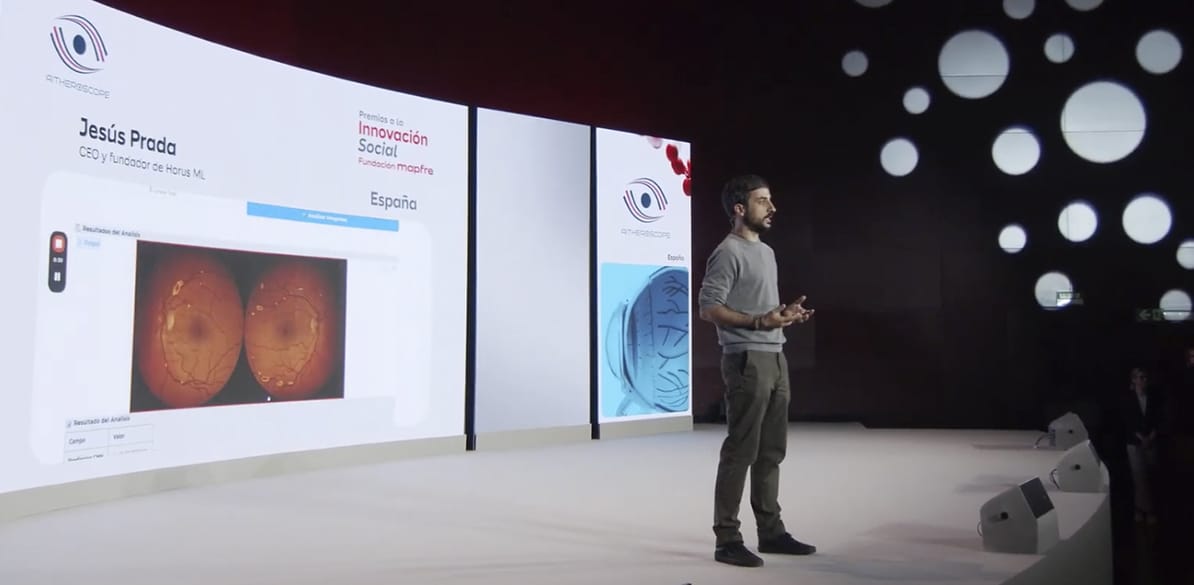
More recently, Aitheroscope (Horus ML), winner of the 9th edition, has been applying artificial intelligence to detect atherosclerosis—one of the leading causes of cardiovascular disease—at an early stage, and the innovation has already been clinically validated in Spanish hospitals.
They all have one thing in common: they are working at the frontier of knowledge, where the potential impact is enormous, but the journey takes time.
The value of the journey: learning, adaptation, and purpose
A comprehensive analysis of the projects reveals something important: there is no single path to success in social innovation.
Some initiatives scale up. Others transform. Others make an impact in specific contexts. And all of them, to a greater or lesser extent, help generate knowledge, blaze new trails, and demonstrate that it is possible to do things differently.
In this sense, even projects that are no longer active are part of that collective learning. Because innovation also involves testing, adjusting, and evolving.
Why Fundación Mapfre is committed to social innovation
The Fundación Mapfre Awards are underpinned by a clear conviction: major social challenges require new solutions.
It is not enough to simply recognize good ideas. It is necessary to support processes, connect ecosystems, and give visibility to those who are building solutions from social, technological, and human perspectives.
The journeys of these projects confirm this: when innovation is impact-driven, when it connects with real needs, and when it finds the right environment to grow, it can transform so much more than a single sector. It can improve people’s lives.
In addition, alongside the winners, there is a whole ecosystem of initiatives that have gone through the Fundación Mapfre Awards—many of them without winning the prize—and that today are also generating impact in their own ways. Through Fundación Mapfre’s Red Innova network, we continue to share experiences and lessons learned, and we also celebrate others’ successes. Some projects have leveraged the visibility, the network of contacts, or the initial momentum to continue growing, consolidate their solutions, or explore new avenues of work. We will soon share more about those. Because in social innovation, the value lies not only in who wins, but in everything that is set in motion all around.
The fact is, innovating—especially when it comes to addressing major social challenges—is not always a straight path. There are projects that need to adapt, reinvent their model, or find new contexts where they fit better. It is all part of the process. Every adjustment, every shift, every lesson learned helps strengthen the system as a whole. Because even when the path changes, the intention remains: to move forward, improve, and keep searching for solutions that matter.