
Travelling exhibitions
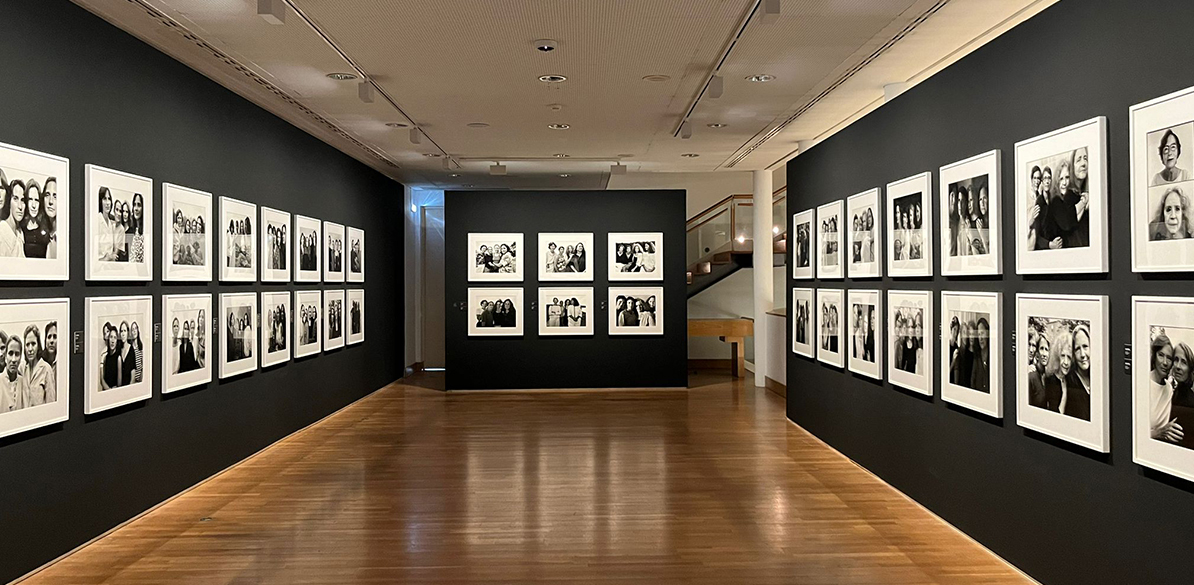
Our exhibition rooms in Madrid and Barcelona are not the only places you can enjoy our photography, drawing, painting and sculpture exhibitions. Once they have been presented in Spain, our idea is that they should be shared far and wide. We want to reach the rest of the world!
Thus the retrospective on Walker Evans headed to Sao Paulo, Stephen Shore to Berlin, Vanessa Winship to Las Palmas de Gran Canaria, the selection of drawings in our collection Hand with Pencil to El Salvador and From Divisionism to Futurism to the Museum of Modern and Contemporary Art of Trento e Rovereto, in Italy.
Part of our program travels to museums and cultural institutions in Europe, North America and Latin America. We want to take art to every corner of the globe. And we hope it reaches you too.
87 exhibitions
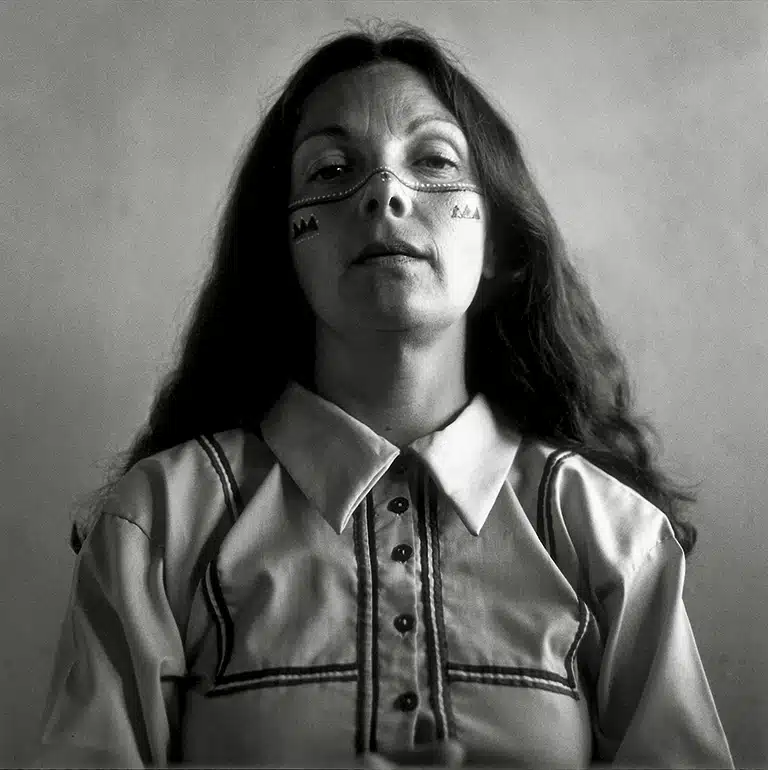
Graciela Iturbide
Self-Portrait with the Seri People, Sonoran Desert, Mexico, 1979
Fundación MAPFRE Collections
© Graciela Iturbide
Graciela Iturbide. Fundación Mapfre Collections
– 12
International Center of Photography (ICP)
Ritual. Nature. Culture.
The work of Graciela Iturbide, one of the most prominent Mexican photographers on the international contemporary scene, is key to understanding the evolution of photography in Mexico and across Latin America.
Straddling the documentary and the poetic, her singular way of seeing integrates lived experience and dreams into a complex web of historical, social, and cultural references. The fragility of ancestral traditions and their precarious survival, the interaction between nature and culture, the importance of ritual in everyday gestures, and the symbolic dimension of landscapes and found objects occupy a central place in her prolific career. Her work is characterized by a continuous dialogue between images, time, and symbols, unfolding in a poetic display where dream, ritual, religion, travel, and community converge.
Celebrated for her portraits of the Seri people, her vision of the women of Juchitán, and her photographs of birds, Graciela Iturbide’s visual journey has extended, beyond her native Mexico, to countries as diverse as Spain, the United States, India, Italy, and Madagascar.
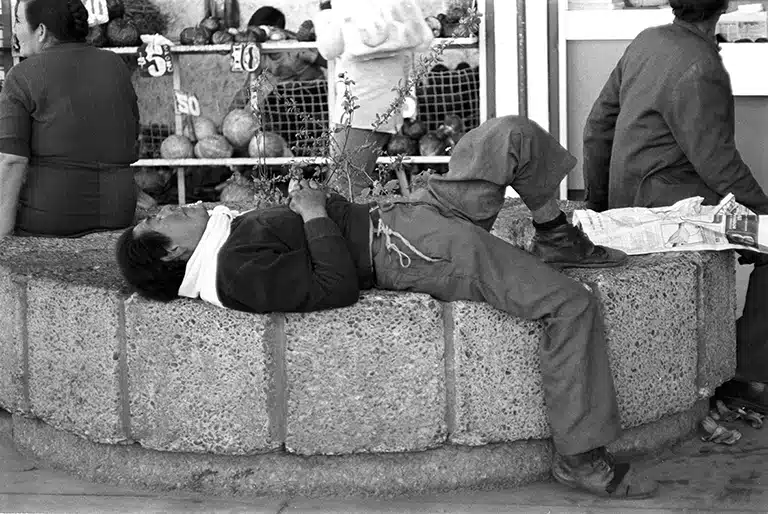
Paz Errázuriz. Dare to Look
– 05
Milton Keynes Gallery (London, UK)
Transgression. Respect. Humanity.
Self-taught, Chilean photographer Paz Errazuriz began her career in the 1970s. Under the political regime of the time, her photographic projects broke the rules by depicting spaces and environments dominated by marginalization, confinement, and characters whose behavior was outside the norm or the established order.
The lack of freedom of movement in a country under a dictatorship from 1973 to 1990 prompted the photographer to look for the reasons behind the confinement of certain people. She repeatedly visited the Philippe Pinel Psychiatric Hospital in Putaendo, where she found people neglected by their own families. There, her eye focused on the human bonds and romantic relationships formed in the psychiatric ward.
She has also turned her attention to the world of prostitution and the social infantilization that affects the elderly.
This artist’s courageous gaze reveals the most hidden aspects of everyday life in Chile, working closely with her subjects and building relationships based on trust and mutual respect.
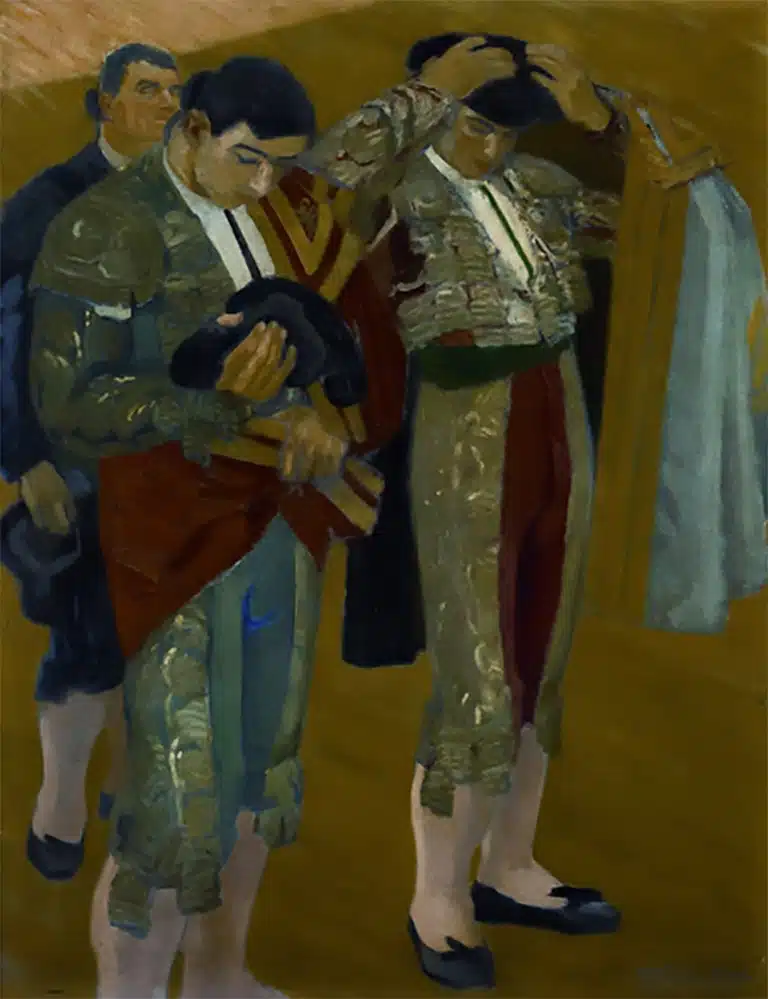
Daniel Vázquez Díaz and new painting in Spain. Fundación MAPFRE Collections
– 28
Gustavo de Maeztu Museum (Estella, Navarre)
New art. Vanguardism. Modernity.
Daniel Vázquez Díaz (1882-1969) was interested in painting from a very young age. At the Ateneo de Sevilla, he met Ricard Canals, Ignacio Zuloaga, and Francisco Iturrino, who would influence his early works. After spending time in Madrid, he moved to Paris in 1906, where he lived for nearly twelve years. There he became acquainted with Spanish artists like Ignacio Zuloaga, Joaquim Sunyer, Hernén Anglada Camarasa, Juan de Echevarría, Pablo Picasso, and Juan Gris, among others, and immersed himself in the work of Paul Gauguin, Paul Cézanne, and Pierre-Auguste Renoir through the art dealer Ambroise Vollard.
When he settled permanently in Madrid in 1918, Vázquez Díaz’s work was recognized by critics as what has come to be known as tempered Cubism, which draws on the post-Impressionist legacy of Cézanne and his constructive approach combined with the use of color in expansive, faceted planes.
His pre-Spanish Civil War work is one of the most interesting chapters in the artistic and cultural landscape of a country that was trying to forge its own path into modernity.
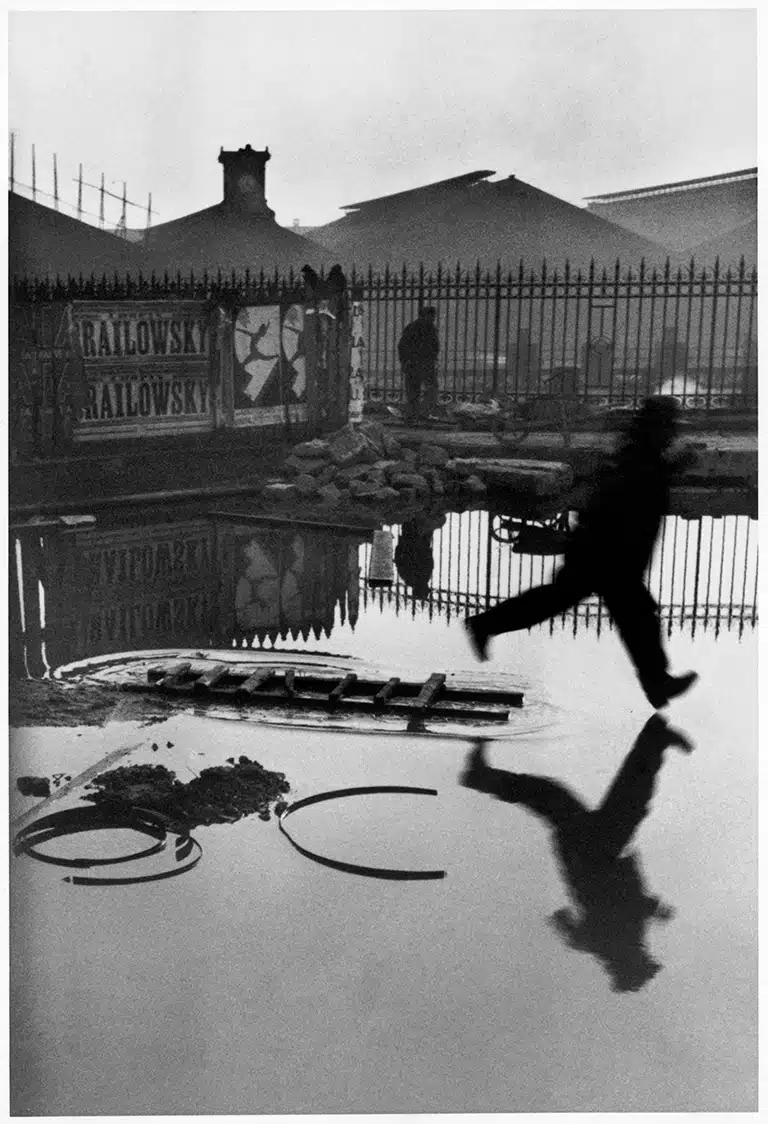
Henri Cartier-Bresson
Behind Saint-Lazare Station, Plaza de Europa, Paris, France,1932
© Henri Cartier-Bresson/Magnum Photos
Henri Cartier-Bresson. Watch! Watch! Watch!
– 25
Photo Arsenale Wien (Vienna, Austria)
Timeless. Observant. Instinctive.
Henri Cartier-Bresson (1908 – 2004), was a photojournalist, artistic photographer and portraitist, he crafted timeless compositions and shaped the style of later generations of photographers. In 1947, he founded the Magnum photo agency alongside Robert Capa, George Rodger and David “Chim” Seymour.
A patient and silent observer, yet nimble and expeditious, the artist captured scenes of people and key events in 20th-century history, earning him the nickname “the eye of the century”. With his talent for finding the “decisive moment”, he captured spontaneous encounters and situations and became one of the most important representatives of street photography. His works, many of which have become iconic today, depict, as if he were an anthropologist, some of the most important events of the 20th century.
With a diverse and varied oeuvre, the exhibition presented by Fundación MAPFRE traces his entire career; from his beginnings, influenced by Surrealism and the New Vision, through photojournalism, where some of his lesser-known reports from the 1960s are particularly noteworthy, to the intimate style of his later years.
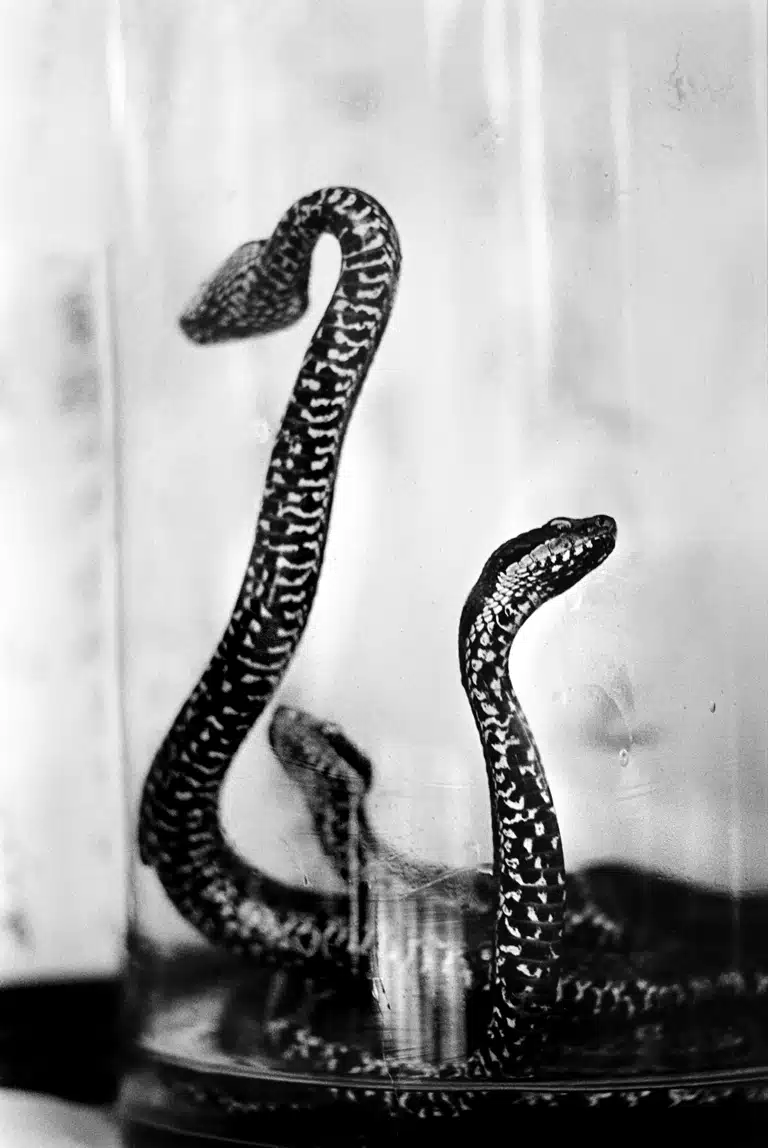
Christer Strömholm
Tokyo, 1961
© Christer Strömholm Estate
Christer Strömholm
– 30
Fundación Tony Catany (Llucmajor, Mallorca)
Humanism. Commitment. Social document.
In Mallorca, Fundación MAPFRE is presenting a retrospective exhibition on the photographer Christer Strömholm (Stockholm, 1918-2002), one of the most emblematic European photographers of the post-war period, whose work, imbued with humanism and social commitment, has a certain documentary character.
From a very young age, Strömholm traveled extensively around the world. After the war, in 1947, he returned to Paris, where he realized that photography allowed him to express himself in line with his desired style. From that moment on, he never stopped taking pictures. In his own words: “I don’t take photographs, I create images. That’s what I’ve done all my life.”
Strömholm finds valuable messages in everything, even in the most humble of objects, to which he gives meaning and resonance through his photographs, which are simply an extension of his own life.
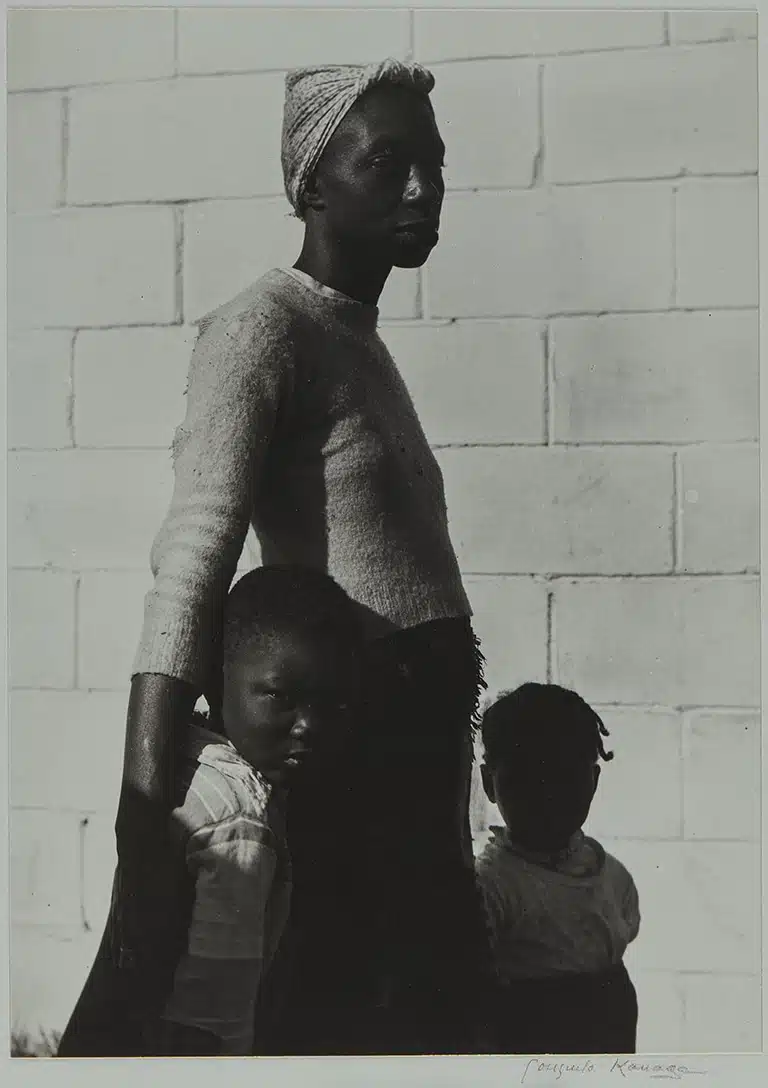
Consuelo Kanaga
She is a Tree of Life, 1950
Brooklyn Museum, gift of Wallace B. Putnam from the Estate of Consuelo Kanaga, 82.65.2250
© Brooklyn Museum
Consuelo Kanaga. Catch the Spirit
– 03
Brooklyn Museum of Art (New York, USA)
Modernity. Social justice. Unconventional.
This exhibition covers the six decades of work by Consuelo Kanaga (1894-1978), a key figure in the history of modern photography, both for her contribution to women being recognized in this field and for her images that confront the viewer with some of the major social issues of the 20th century.
The life and photography of this American photographer reflected her concern for social justice. She was truly interested in people and their problems: social marginalization, poverty, racial harassment, and inequality, especially in relation to the African American population in the United States.
An unconventional figure deeply committed to social justice, Consuelo Kanaga was ahead of her time. She worked as a photojournalist and was one of the few women to maintain close ties with the American avant-garde circles in San Francisco and New York.
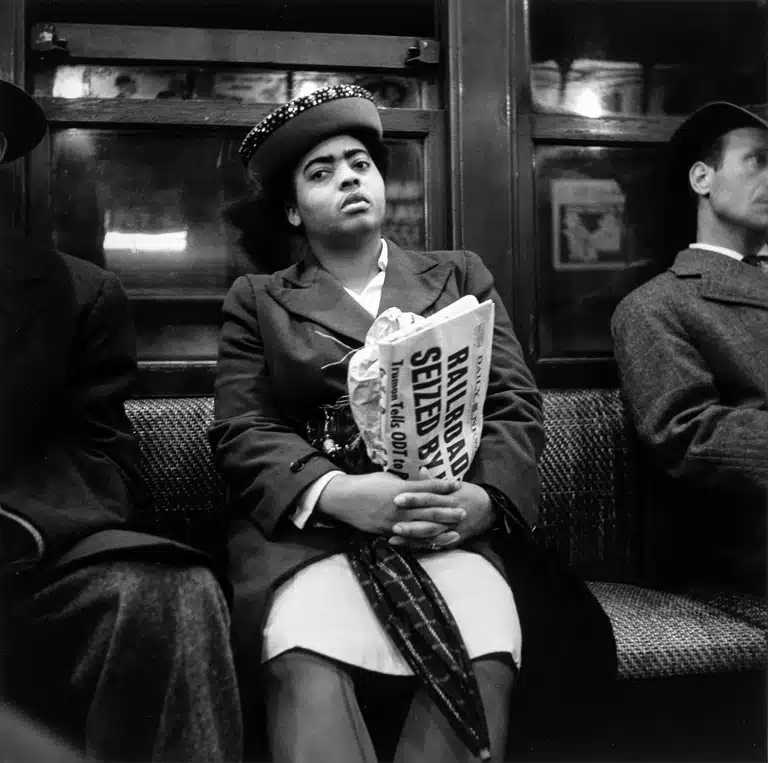
Louis Stettner
Woman Holding Newspaper, New York , 1946
Courtesy of the Louis Stettner Archive, Paris
© Louis Stettner Estate
Louis Stettner
– 08
Antiguo Instituto Jovellanos (Gijón, Asturias)
Poetry. Street photography. Lyrical humanism.
Louis Stettner (New York, 1922-Paris, 2016) trained at the New York Photo League school, where he studied under Sid Grossman and coincided with Weegee, who would become a great friend of his. In Paris he met Brassaï, who became his mentor. However, despite being fully immersed in the debate on historical photography for a good part of the last century, his work was not given the recognition it deserved at the time, perhaps because it did not adhere to a specific style.
Straddling New York and Paris, Stettner was rooted in two worlds at a time when most photographers could only relate to one. In this sense, his work contains aesthetic elements of both New York street photography, with its bustling subway scenes, and the lyrical humanism of the French tradition, with the mountainous landscapes of the Alpilles in France.
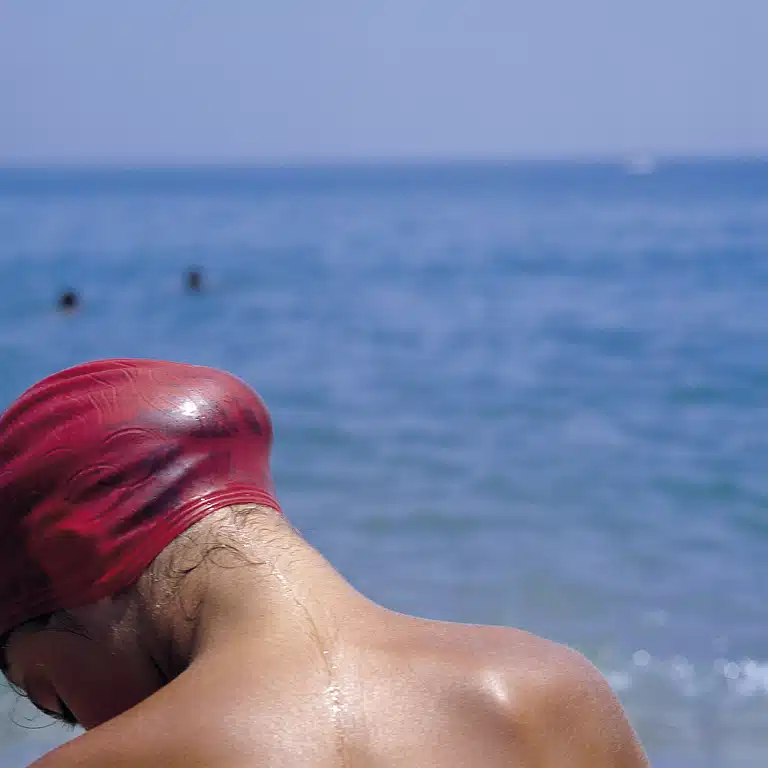
Carlos Pérez Siquier
Roquetas de Mar, 1973
© Carlos Pérez Siquier. VEGAP, 2024
Carlos Pérez Siquier. Fundación MAPFRE Collections
– 02
Fundación MAPFRE Canarias (La Laguna, Tenerife)
Modernity. Intuition. Originality.
Carlos Pérez Siquier (1930-2021), a leading figure in the forging of photographic modernism and the professionalizing of this medium in Spain, enjoyed a prominent place on the Spanish scene, firstly for his neorealism work and later as a pioneer of color photography.
If there is something that characterizes and makes the photography of Carlos Pérez Siquier so valuable and interesting, it is, on the one hand, the theme that runs through it from beginning to end–the author’s real and immediate world–and, on the other, the keen and unique gaze that the photographer poured into the images. This results in one of the most powerful and important bodies of work in Spanish photography from recent decades, which earned him the 2003 Spanish National Photography Prize.
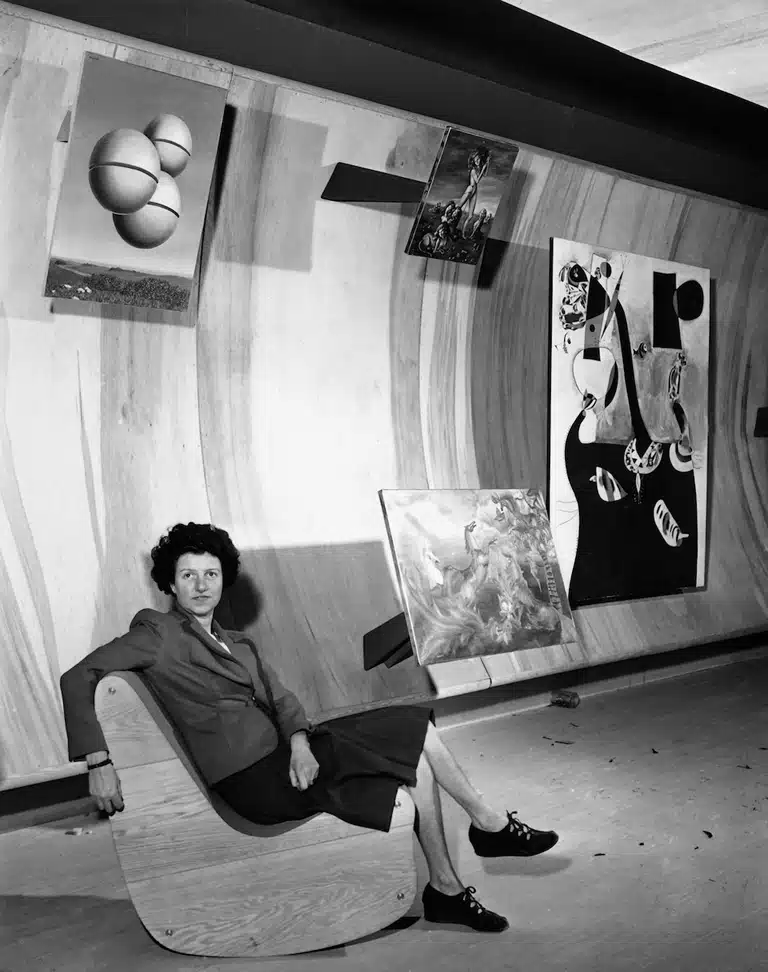
Berenice Abbott
Peggy Guggenheim poses in her New York gallery Art of This Century, October 22, 1942
© 2025 Estate of Berenice Abbott
© AP Photo / Tom Fitzsimmons
31 Women. A Peggy Guggenheim exhibition
– 29
Museu de Artes Contemporânea – MAC (Lisboa, Portugal)
Talent. Opposition. Feminism.
In 1943, the collector Peggy Guggenheim organized one of the first exhibitions exclusively dedicated to the work of female artists in her New York gallery, Art of This Century. Entitled Exhibition by 31 Women, one of its aims was to highlight the contribution of women artists, who had often been relegated to the role of muses, imitators or companions of famous male artists due to the patriarchal mentality of the time.
The artists selected for 31 Women–including both established creators and emerging talents–came from Europe and the United States, and many of them were linked to surrealism and abstract art. Aware of the challenges they faced as women, these artists often swam against the tide, using the dominant artistic languages of their time: they reinterpreted the concepts of surrealism and abstract expressionism to reveal the patriarchal precepts on which these movements were based.