You could save someone’s life today
Learn what to do on World CPR Day
Health
One day, on the underground, in a restaurant or walking down the street, someone suddenly collapses next to you. They have just suffered a cardiac arrest and their life may depend on how you react. It is estimated that for every minute without help, the chances of survival fall by 10%. Imagine what could happen in the ten minutes it takes for an ambulance to arrive…
In Spain, it is estimated that there are around 30,000 out-of-hospital cardiac arrests each year. The experts are clear: if a bystander starts CPR, the chances of survival can increase by up to 2.5 times. However, statistically, only 4 out of 10 people currently have the courage to respond.
Being one of those four people who know what to do makes you the link that keeps life going until the emergency services arrive. And learning how to do it is as simple as knowing the basic steps of cardiopulmonary resuscitation (CPR).
- Ensure safety: make sure that you, the victim, and any other people nearby are safe.
- Check if the person is responsive: gently touch their shoulders and speak loudly to them. If they do not respond and are not breathing (or are breathing abnormally), they may be in cardiac arrest.
- Call 112: ask for immediate help. Put the phone on speaker so the operator can guide you. If someone is with you, have them call while you begin the procedure. Ask someone to go find a defibrillator (AED).
- Begin chest compressions:
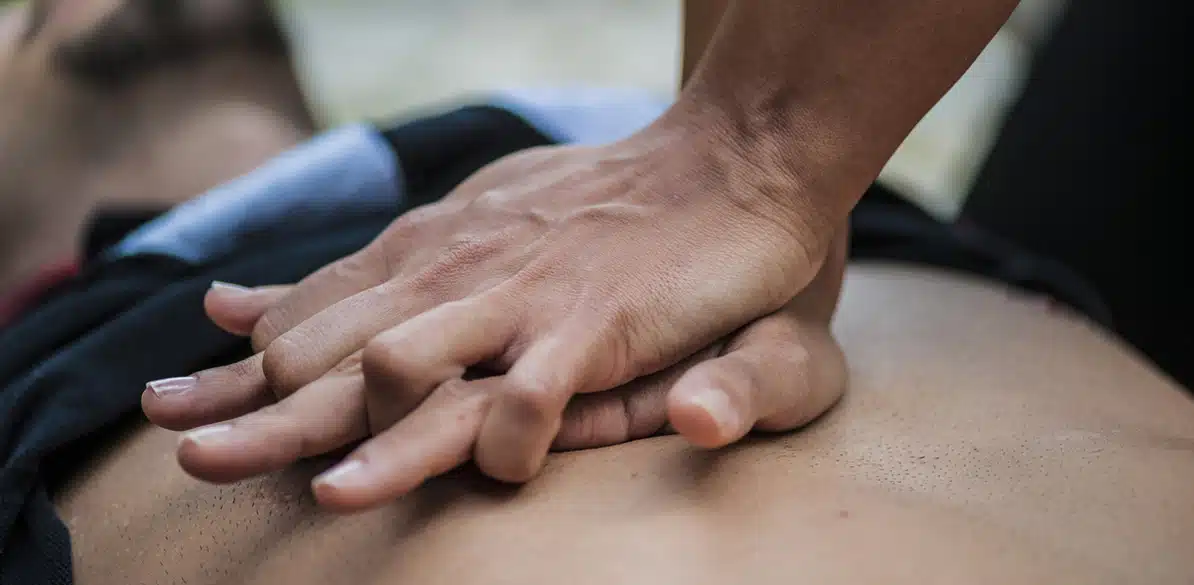
- Kneel beside the victim. Place the heel of one hand in the center of the chest (on the lower half of the sternum).
- Place your other hand on top of the first one, interlock your fingers, and keep your arms straight.
- Press down hard and fast, about 5-6 cm deep, at a rate of 100 to 120 times per minute (the rhythm of the Bee Gees song Stayin’ Alive might help you).
- Allow the chest to rise after each compression.
- Don’t be afraid: even if you aren’t performing the CPR perfectly, doing anything is much better than doing nothing.
- Add ventilation: after 30 compressions, give 2 mouth-to-mouth breaths.
- Tilt the head back and pinch the nose with one hand, lift the chin and open the mouth with the other hand.
- Cover their mouth with yours and blow slowly until you see their chest go up.
- Pull away, take a normal breath, and perform another rescue breath.
- Important: if you don’t feel able to do this, continue the chest compressions anyway.
- Keep going: perform 30 compressions + 2 rescue breaths.
- Use a defibrillator (AED) if one is nearby: turn it on and follow the instructions. The device will tell you exactly what to do and when to deliver the shock. If there is another person with you, CPR should continue while the pads are being placed on the chest.
- Don’t stop: keep performing CPR until professional help arrives or the person shows signs of life.
On October 16, World CPR Day, we invite you to step up: get informed, learn, and help save lives. When faced with cardiac arrest, taking action can save a life.
In this infographic, we explain all the details visually so you know what to do and can teach others to do it, too. Share it.