
Art and culture
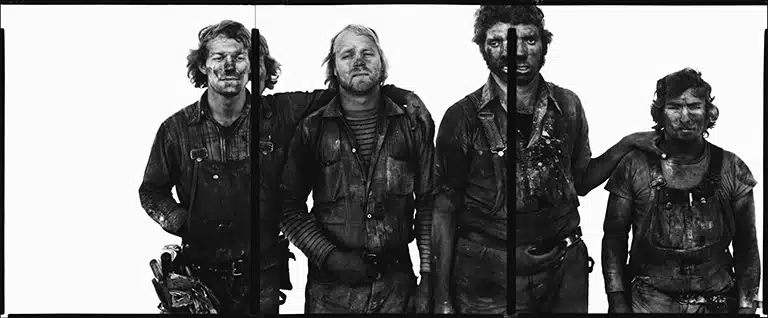
Richard Avedon
Roger Tims, Jim Duncan, Leonard Markley and Don Belak, coal miners, Reliance, Wyoming, August 29, 1979
© The Richard Avedon Foundation
JUNE.06.2026 – AUG.30.2026, MAD
Richard Avedon
In the American West, 1979-1984
Committed to photography from a very young age, Richard Avedon (New York, 1923–San Antonio, Texas, 2004) made his mark in the fashion world, where he worked for Harper’s Bazaar, Vogue, and other magazines, while his photographic projects addressed social and political issues, such as the civil rights movement and the Vietnam War.
In the American West is the result of a commission he received from the Amon Carter Museum of American Art in Texas: between 1979 and 1984, Avedon traveled throughout the American West to photograph its inhabitants. The result was a portrayal of the region and its people that differed radically from the traditional images that idealized the legend of the American West. The series —one of the major milestones in Avedon’s career— is considered a landmark in the history of photographic portraiture.

Alejandro Cartagena
Suburban Bus #73, from the series Suburban Bus, 2016
Courtesy of the artist
© Alejandro Cartagena
JUNE.06.2026 – AUG.30.2026, MAD
Alejandro Cartagena
Ground Rules
Throughout his productive career, Alejandro Cartagena —born in the Dominican Republic in 1977 and based in Mexico— has developed a body of works that challenges the traditional concept of the “decisive moment,” instead focusing on seriality and the multiplicity of perspectives as the axes of his work. From this standpoint, and always through a critical and humanistic lens, his work addresses many of Mexico’s complex realities: migration, housing, the border with the United States, and urban transformation, among others.
Far from being fragmented, Cartagena’s photography presents a coherent and multifaceted view of contemporary challenges and invites viewers to contemplate them from multiple perspectives.
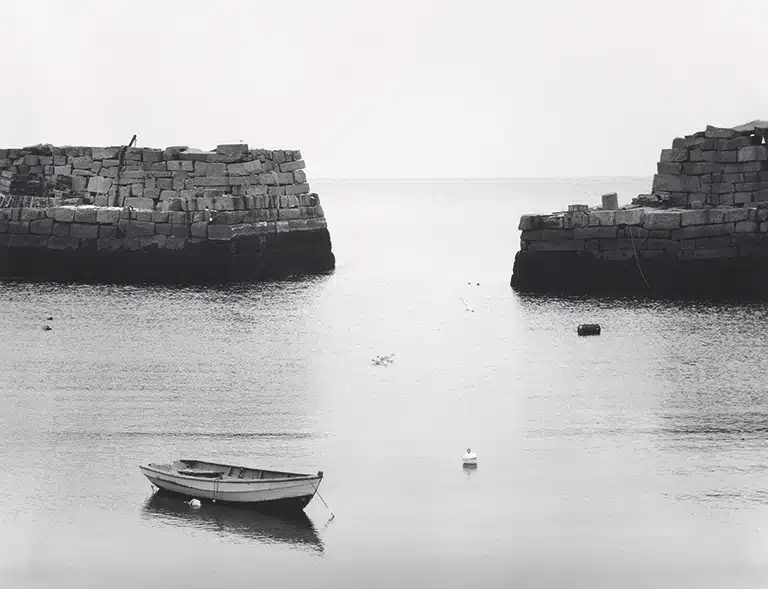
Minor White
Cape Ann, Massachusetts, from Sequence 1968, December 24, 1966
The Minor White Archive, Princeton University Art Museum, bequest of Minor White
© Trustees of Princeton University. Photo: Allen Chen
JUNE.18.2026 – SEP.06.2026, BCN
Minor White
A figure of enormous influence in 20th-century American photography, Minor White (Minneapolis, 1908–Boston, 1976) developed his concept of photography across virtually every area of the medium, from creative practice and teaching to editorial, museum, and commercial work. Founder and editor of the magazine Aperture and a professor at some of the most important educational institutions in the American scene, Minor White used these platforms to convey and share his ideas and to pursue his goal of presenting the photographic image as a space for self-knowledge and spiritual transformation. Organized on the occasion of the fiftieth anniversary of his death, this exhibition —the first major retrospective of his work in Europe— offers a comprehensive overview of his oeuvre, featuring his most representative themes (nature photography, portraiture, and street photography), with special attention to his work with sequences.
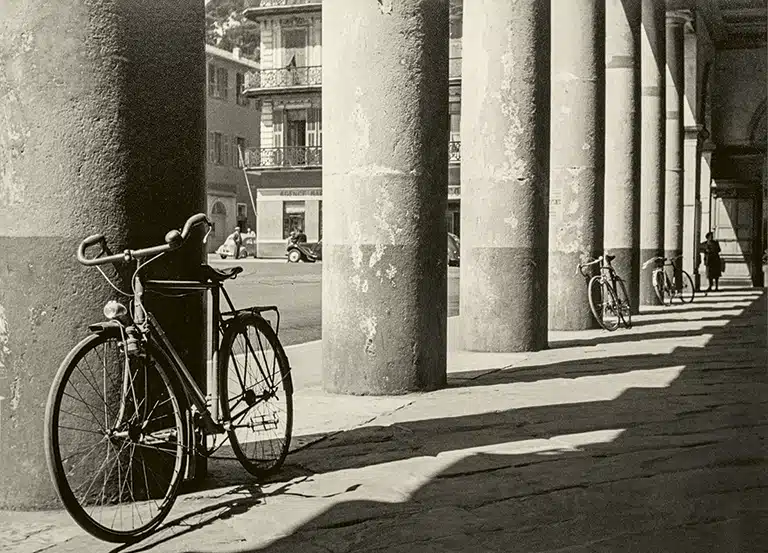
Joaquín Tusquets de Cabirol
Trip to France, May 1955
Joaquín Tusquets de Cabirol Photographic Archive / Fundación Photographic Social Vision
© Archivo Fotográfico Joaquín Tusquets de Cabirol
JUNE.18.2026 – SEP.06.2026, BCN
Joaquín Tusquets de Cabirol
Eloquent Form
Joaquín Tusquets de Cabirol (Barcelona, 1904–1979) grew up in a welltodo family environment that provided him with an education attuned to art and culture, which undoubtedly helped shape his photographic sensibility. A chemist and industrialist by profession, he found in photography a means to express a lucid, aesthetic and profound view of his surroundings. His images, which offer a unique vision of postwar Catalonia, stand out for their evolution from pictorialism toward formal and technical experimentation, while the exceptional quality of his prints is owed to his mastery of chemical developing processes.
The exhibition, organized by Fundación Mapfre in collaboration with the Photographic Social Vision Foundation, the institution that safeguards and preserves the photographer’s archive, forms part of KBr’s ongoing commitment to showcasing photography collections held in Catalan institutions.
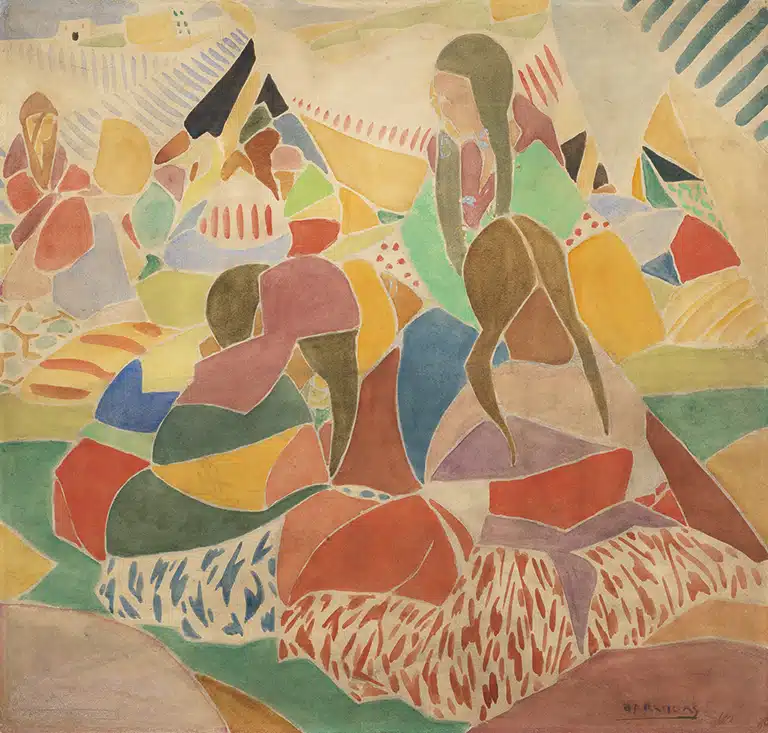
Rafael Barradas
Zíngaras, 1917
Fundación Mapfre Collections
Pencil in Hand. 20th Century Drawings. Fundación Mapfre Collections
– 27
Museo San Telmo (San Sebastián, Guipuzkoa)
Modernity. Heterogeneity. Avant-garde.
In 1997, we embarked on a collection focused on works on paper and the path to modernity during the transition from the 19th to the 20th century. Today, it comprises more than 100 works by Spanish artists who were still linked to tradition—such as Mariano Fortuny, Joaquín Sorolla, and Francisco Pradilla y Ortiz—but who were nonetheless open to the shifting tides of the new century. Many of them personally encountered key figures such as Degas, Rodin, and Schiele while traveling outside Spain; these artists are also represented in the collection. Of particular note is Pablo Picasso, whose presence in Paris became a bridge between European avant-garde movements and Spanish art.
In addition to drawings by Joaquim Sunyer, Enric Casanovas, Joaquín Torres García, and Francis Picabia, the exhibition places special emphasis on Surrealism, featuring key figures such as Dalí, Miró, Luis Fernández, and Óscar Domínguez.
After the Civil War, the avant-garde gave way to melancholic and realistic art, as exemplified by the watercolors of Arturo Souto. And new developments emerged, leading to Informalism, represented in the late works of Tàpies and Chillida, bringing to a close a coherent and sensitive overview of 20th-century art history on paper.
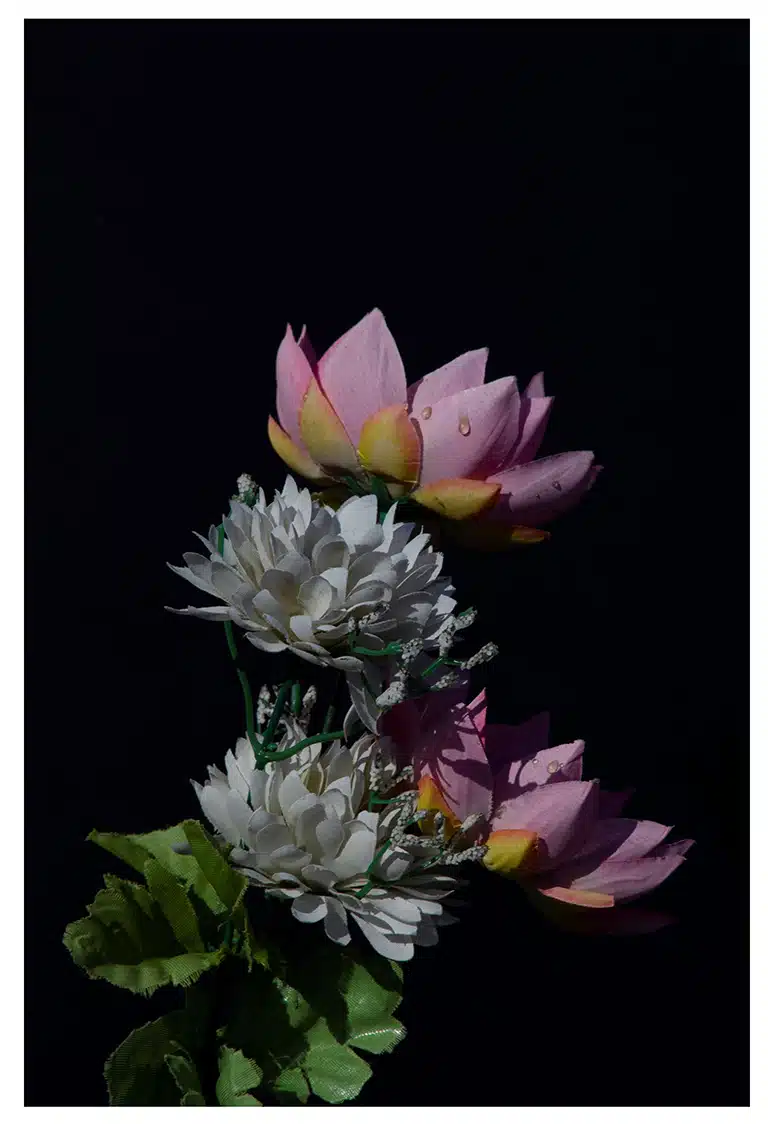
Sakiko Nomura
Moonlit Night 015, 2023
© Sakiko Nomura courtesy of Akio Nagasawa Gallery
Sakiko Nomura
– 11
Museo de Bellas Artes de Castellón (Castellón)
Desire. Tenderness. Intuition.
The 1990s in Japan were a time of globalization and change, not least in the fields of art and photography. It was also a time when Japanese society was highly discriminatory toward women. Against this backdrop, a new generation of female artists emerged whose work was often derisively labeled “girl photography.” One of these pioneers was Sakiko Nomura (Shimonoseki, Yamaguchi Prefecture, 1967).
Nomura’s subjects are attractive young people. They embody the power and tension of erotic desire, yet also exude great tenderness. Her nudes, almost always in black and white, set in nocturnal, mysterious, and shadow-filled tableaux—with visible grain or out of focus—alternate with other images of animals, still lifes (especially flowers), cityscapes, hotel room interiors, atmospheric phenomena, and moving lights and reflections. Her photographs refer to a specific date, events, or people, and, in general, are intuitive scenes, laden with allegorical meaning, such as the transience of things, the fleeting nature of moments, and, ultimately, the passage of life.
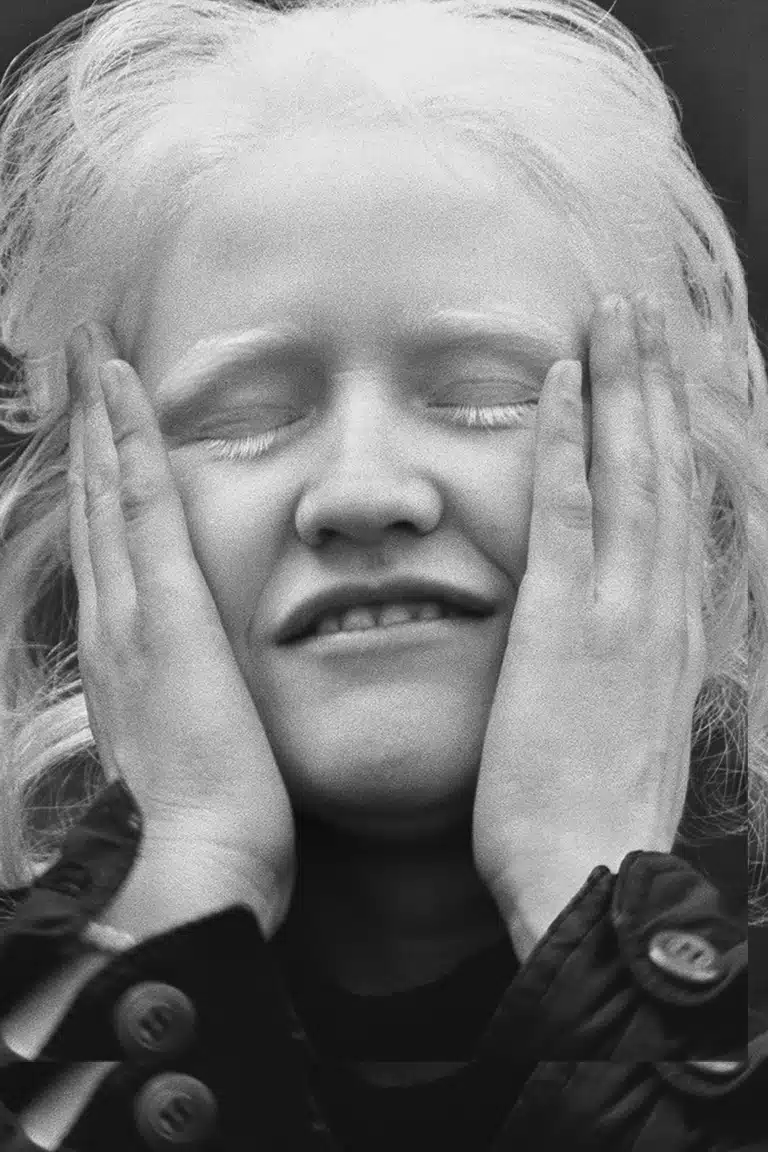
Paz Errázuriz
Ceguera I [Blindness I], , 2003
Fundación Mapfre Collections © Paz Errázuriz
Paz Errázuriz. Fundación Mapfre Collections
– 25
Museo del Patrimonio Municipal (Málaga)
Self-taught. Respect. Resistance.
Paz Errázuriz (Santiago, Chile, 1944) has spent most of her career in Chile, and her work constantly references the country’s political and sociological context. Her deeply committed images seek to lend a voice to those who are rarely heard; her depictions of marginalization portray their subjects with trust, respect, and solidarity.
Self-taught, Errázuriz co-founded the Association of Independent Photographers (AFI) in 1981. Moved by her interest in exploring the reality of individuals on the fringes of society, the artist began to photograph children, the elderly, men and women in psychiatric institutions, transsexuals, prostitutes, people sleeping unprotected in the street and, more recently, Native Americans. Errázuriz delves into the most uncomfortable nooks and crannies of everyday life in Chile, presenting figures who, from the periphery, reveal, even without an explicit desire to criticize, different forms of resistance to the imposed norms.
Over time, this interest evolved into a sense of camaraderie, trust, and respect for her subjects.
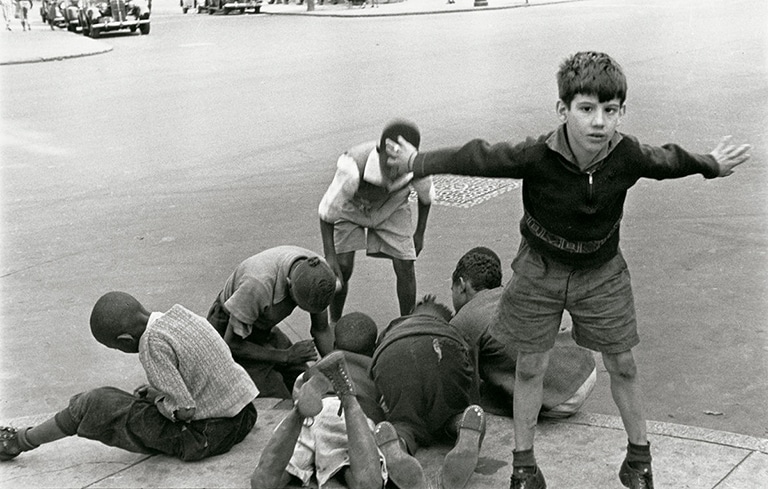
Helen Levitt
New York, ca. 1940
© Film Documents LLC, courtesy Galerie Thomas Zander, Cologne
Helen Levitt
– 04
Kunsthall Rotterdam (Rotterdam, the Netherlands)
Ambiguity. Emotion. Connection.
Helen Levitt (New York, 1913–2009) was one of the first women to make her mark in the world of photography, particularly street photography. Although she preferred never to discuss her images, her photographs connect with the viewer thanks to the universal emotions they convey.
Her work, marked by ambiguity and restrained emotion, has been recognized for its ability to capture fleeting moments of human connection in complex urban settings.
In 1934 she bought her first camera and, shortly thereafter, joined the New York Film and Photo League, a collective committed to social change through images. There she met Henri Cartier-Bresson, whose influence was decisive in Levitt’s decision to pursue photography as an independent artist.
Between 1938 and 1942, she shot many of the images that would establish her as one of the great 20th-century photographers. She roamed neighborhoods, including Spanish Harlem, the Lower East Side, and Brooklyn, documenting everyday life on the streets—especially that of children—with a sensitive and uncontrived eye.